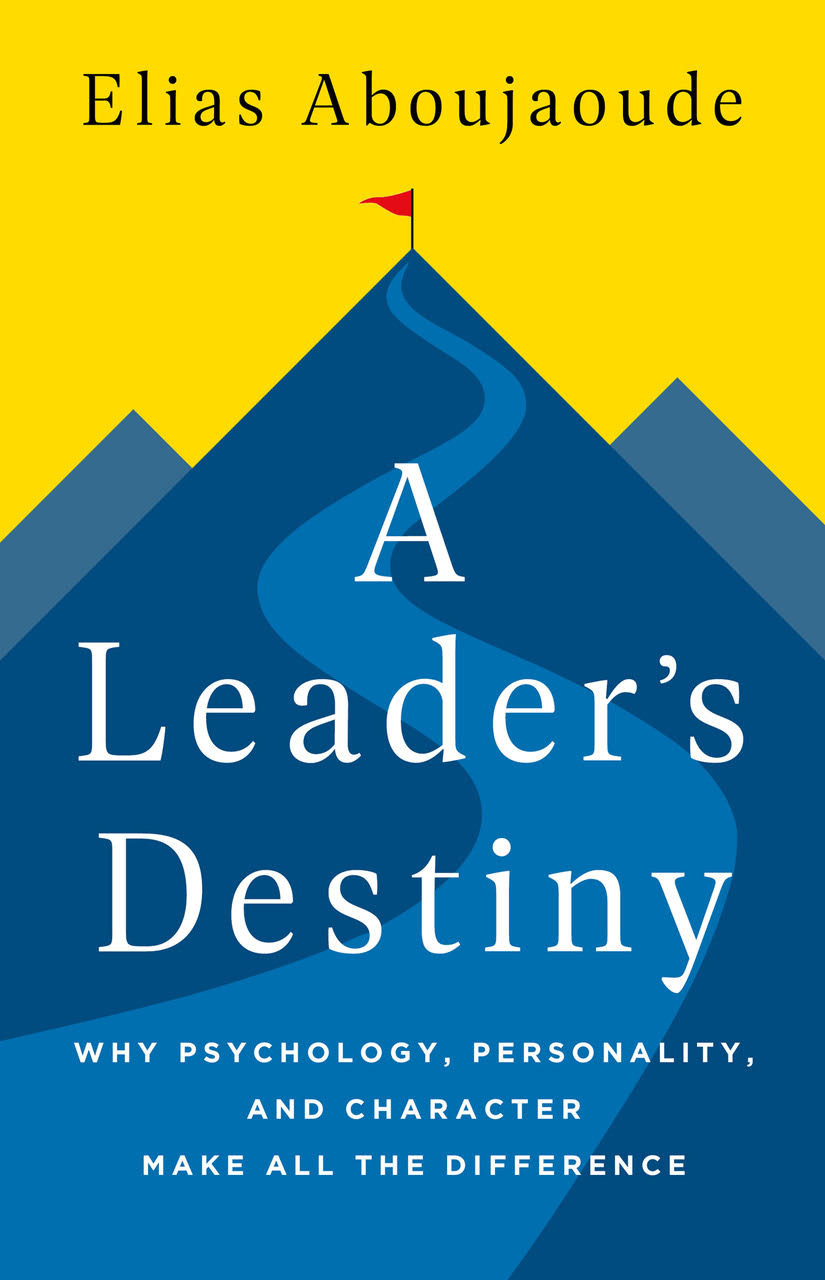
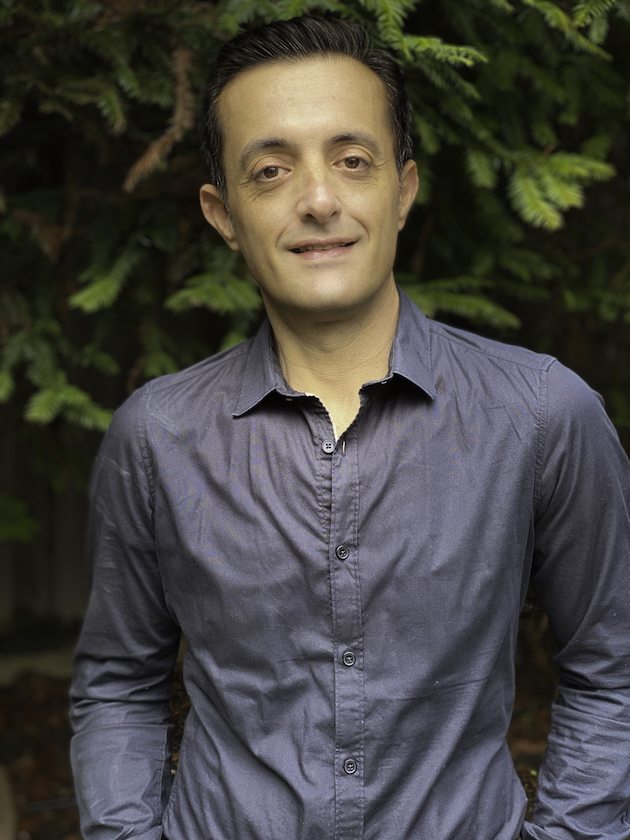
Dr. Aboujaoude is a psychiatrist and author based at Stanford University. His research interests have focused on obsessive compulsive disorder and behavioral addictions, including problematic Internet use.

Virtually You: The Dangerous Powers of the E-Personality on Amazon
author page at W. W. Norton Publishers
A penetrating examination of the insidious effects of the Internet on our personalities — online and off.
"one of this year's most thought-provoking jeremiads" (Lavonne Neff, The Christian Century)
Instantly engaging and eminently accessible, Aboujaoude offers an enlightening and cautionary exploration of an increasingly intrusive aspect of modern society. (Booklist)
A psychiatrist who specializes in obsessive-compulsive disorders argues persuasively that the Internet can be hazardous to our mental health. ... Aboujaoude offers a unique psychiatrist's perspective and an urgent wake-up call for those still in the dark. (Kirkus Reviews)
Compulsive Acts: A Psychiatrist's Tales of Ritual and Obsession on Amazon
In this compelling book, we meet a man who can't let anyone get within a certain distance of his nose, two kleptomaniacs from very different walks of life, an Internet addict who chooses virtual life over real life, a professor with a dangerous gambling habit, and others with equally debilitating compulsive conditions. Writing with compassion, humor, and a deft literary touch, Elias Aboujaoude, an expert on obsessive compulsive disorder and behavioral addictions, tells stories inspired by memorable patients he has treated, taking us from initial contact through the stages of the doctor-patient relationship. Into these interconnected vignettes Aboujaoude weaves his own personal experiences while presenting up-to-date, accessible medical information. Rich in both meaning and symbolism, Compulsive Acts is a journey of personal growth and hope that illuminates a fascinating yet troubling dimension of human experience as it explores a group of potentially disabling conditions that are too often suffered in silence and isolation.
reviews

Impulse Control Disorders on Amazon
In the last decade, much needed attention and research has been focused on the group of psychiatric conditions termed "impulse control disorders" or ICDs. Pathological gambling, compulsive shopping, kleptomania, hypersexuality, Internet "addiction," among other disorders, are characterized by a recurrent urge to perform a repetitive behavior that is gratifying in the moment but causes significant long-term distress and disability. Despite the high rate of co-morbidity with obsessive compulsive disorder, ICDs are now clearly distinguished from these disorders with a unique clinical approach for diagnosis and treatment. A wide array of psychopharmacologic and psychotherapeutic options is now available for treating these disorders. Drs. Elias Aboujaoude and Lorrin M. Koran have compiled the world's foremost experts in ICD research and treatment to create a comprehensive book on the frequency, evolution, treatment, and related public policy, public health, forensic, and medical issues of these disorders. This is the first book to bring together medical and social knowledge bases related to impulse control disorders.
...
...
...
...
at the Onassis Cultural Center, Athens, Greece.Body dysmorphic disorder, or BDD, is a serious appearance-based affliction. BDD sufferers feel unbearably ugly, and little you can say can change their minds. However, when BDD affects a patient's loved one, as when a patient starts believing that a child or spouse is unbearably ugly, the diagnosis takes on a new meaning and new toll.
Why would an otherwise healthy woman needlessly worry about stomping a baby to death?
We live by a new and blurred calendar. One consequence of the digital revolution is the explosive growth in productivity. Another is that we are now constantly on call for work. The lines that separated weekends from weekdays, “eight to five” from the rest of the twenty-four-hour cycle, and workdays from holidays or vacations now feel antiquated.
The Internet has proven utterly incapable of self-policing, and some external enforcer is needed if a site wants to maintain a minimum of civility among its members.
Not long ago, the mention of “bath salts” may have conjured up scenes of pampering and ultra-relaxation, perhaps in a spa setting or a five-star resort. More and more, however, bath salts are the street name for a new family of synthetic chemicals that people are getting high on, including mephedrone, pyrovalerone and methylenedioxypyrovalerone.
Love blossoms in the strangest places, and there is something wonderfully life-affirming about that.
War casualty: a psychoanalyst is muted for the crime of treating a traumatized population.
if grieving feels simple, easy or more efficient online, then maybe we are diminishing the process somehow.
We trusted him with nothing less than our brains, allowing ourselves to become physiologically hooked on one genius product after another. What to do now when the "fix" starts yielding less and less of a "high"? Where do we flock? Who do we ping? What do we download?
We used to want to keep up with the Joneses. Now, it's our online alter egos we are competing with. Could our new relationship with money be contributing to our economic woes?
More than ever, the Internet and "personal media" are putting us in the driver's seat, and that is making us more narcissistic.
How our real life persona increasingly resembles that of our avatar...
By all accounts, Tyler Clementi, the 18-year-old Rutgers freshman who jumped to his death after his roommate streamed a video of him having sex with another man, followed appropriate—in retrospect perhaps old-fashioned—dorm etiquette. To avoid surprises, the shy music major would ask to have the room to himself for specified blocks of time when he planned an intimate meeting.
Much has been said about how digital media are changing how we write. Not surprisingly, reading is also changing. Eye-tracking experiments suggest that online reading does not progress in any “logical” way but unfolds like a giant-font letter “F” superimposed on the web page.
Do you worry that personal information that your doctor types into your electronic medical chart will have the same level of privacy as your Facebook status updates? Privacy is passe, but how about for your health record?
All learning starts with the ability to focus and heed a teacher’s command to “pay attention.” Yet kids, like many of us, are showing a classroom attention span that is increasingly like their attention span on Facebook: Many seem to be exquisitely distractible and unable to focus on Mrs.
The Psychiatrist as Barista: Can We Caffeinate Our Anxiety Away?
We are accustomed to people allowing the less attractive features of their personalities to blossom online. Lewd, impulsive and antisocial behavior becomes irresistible when potential perpetrators are shielded by secrecy and online anonymity.
Brain imaging studies are showing that a form of therapy known as cognitive behavioral therapy produces changes in the brain that are similar to what Prozac-like drugs do. What does this tell us about how psychotherapy works?
Americans are spending a shocking amount of time logged on and plugged in. Stanford University psychiatrist Dr. Elias Aboujaoude conducted the largest study to date on Internet addiction and has spent years treating patients whose lives have been disturbed by their cyber lifestyle. Aboujaoude's talk is a penetrating examination of the effects of the new virtual world and what he calls the "big social experiment" we are engaged in online.
In the virtual world, we come alive as distinct beings: more confident and efficient, but also more aggressive, impulsive, and child-like. This new self, which Aboujaoude dubs our "e-personality," manifests itself in every curt email we send, emoticon we draw, Facebook "friend" we make, and "buy now" button we click.
Too potent to be confined online, however, those e-personality traits seep offline. There is a constant back-and-forth between our online and offline lives. The rudeness we are capable of in our e-mails and the lack of judgment we show in our online purchases and sexual hookups do not stay "there."
Rather, they bleed into our real lives, leading to the propagation, offline, of undesirable personality traits such as impatience, immoderation, impoliteness, and impulsivity. For example, how does easy access to Internet pornography affect our sex and love lives? Does the fact that we have 300 superficial Facebook "friends" make us less likely to invest time and energy nurturing deeper, offline, friendships? Does the Internet enrich us with its surfeit of information, or could it also provide a false base of knowledge upon which we try to diagnose ourselves and fix whatever ails us? Does the immediate gratification promised by the Internet, and the fast pace of online transactions, lead us to become speed-obsessed in real life and unable to enjoy a down moment? And what of the permanence of the Internet and the fact that so much of our personal information is easily accessible by anyone on the Web? Does this affect the way we behave in our dealings with others and make us paranoid about sharing more, like "the world knows enough about me already"?
The end result of interacting with the virtual world is a "whole new you," as countless products that have nothing to do with technology often promise but, unlike the Internet, almost never deliver. Yet foreign as it may seem, it is still you, virtually speaking, and you still own it and own its consequences – that our virtual half has a mind of its own is hardly a good enough defense when it gets us in trouble. That is why it is imperative that we contemplate our new psychology, even as the virtual world, a contemplation-averse medium, may be slowly compromising the skills we need to fully assess its impact on our lives.
How are our day-to-day reality and sense of ourselves changing as a function of our online browsing? The author of the upcoming Virtually You, Aboujaoude uses examples from his reseach and clinical and personal experience to answer this question, highlighting how real life is being reconfigured in the image of a chat room and how, more and more, we resemble our avatar.
Aboujaoude E. Meeting at the Border: An Overview of Borderline Personality Disorder. The Resident Reporter. 2001;6:13-18.
Aboujaoude E. The Psychiatric Hospital of the Cross: A Sane Asylum in the Middle East. American Journal of Psychiatry. 2002;159(12):1982.
Aboujaoude E, Chuong H, Koran LM. A One Year Naturalistic Follow Up of Patients with Compulsive Shopping Disorder. Journal of Clinical Psychiatry. 2003;64(8):946-950.
Aboujaoude E, Gamel N, Koran LM. Overview of Kleptomania and Phenomenological Description of Forty Patients. Primary Care Companion, Journal of Clinical Psychiatry. 2004;6:244-247.
Aboujaoude E, Gamel N, Koran LM. A Case of Kleptomania Correlating With Premenstrual Dysphoria. Journal of Clinical Psychiatry. 2004;65(5):725-726.
Koran LM, Aboujaoude E, Bullock KD, Franz B, Gamel N, Elliott M. Double-blind Treatment with Oral Morphine in Treatment-resistant Obsessive Compulsive Disorder. Journal of Clinical Psychiatry. 2005;66(3):353-359.
Koran LM, Gamel N, Chuong H, Smith E, Aboujaoude E. Mirtazapine for Obsessive Compulsive Disorder: An Open-label Trial Followed by Double-blind Discontinuation. Journal of Clinical Psychiatry. 2005;66(4):515-520.
Koran LM, Aboujaoude E, Ward H, Shapira NA, Sallee FR, Gamel N, Elliott M. Pulse-loaded Intravenous Clomipramine in Treatment-resistant Obsessive Compulsive Disorder. Journal of Clinical Psychopharmacology. 2006;26(1):79-83.
Aboujaoude E, Koran LM, Gamel N. Potential Markers for Problematic Internet Use: A Telephone Survey of 2513 Adults. CNS Spectrums. 2006;11(10):750-755.
Aboujaoude E, Koran LM. Prevalence Underestimated in Problematic Internet Use Study. (Response to Dr. Jerald J. Block.) CNS Spectrums. 2006;12:14-15.
Koran LM, Faber RJ, Aboujaoude E, Large MD, Serpe RT. Estimated Prevalence of Compulsive Buying Behavior in the United States. American Journal of Psychiatry. 2006;163(10):1806-1812.
Koran LM, Aboujaoude E, Solvason B, Gamel N, Smith E. Escitalopram for Compulsive Buying Disorder: A Double-blind Discontinuation Study. Journal of Clinical Psychopharmacology. 2007;27(2):225-227.
Koran LM,
Aboujaoude E, Gamel N. Escitalopram
Treatment of Kleptomania: An Open-label Trial Followed by Double-blind Discontinuation. Journal
of Clinical Psychiatry. 2007;68(3):422-427.
Koran LM, Aboujaoude E, Gamel N. Duloxetine Treatment of Dysthymia and Double Depression: An Open-label Trial. Journal of Clinical Psychiatry. 2007;68(5):761-765.
Aboujaoude E, Koran LM: Nonparaphilic Sexual Disorders in Clinical Handbook of Obsessive-Compulsive Disorder and Related Problems. Edited by Abramowitz J, McKay D, and Taylor S. Baltimore, The Johns Hopkins University Press, 2008, pp. 257-269.
Aboujaoude E, Barr JJ, Gamel N. Memantine Augmentation in Treatment-resistant Obsessive Compulsive Disorder: An Open-label Trial. Journal of Clinical Psychopharmacology. 2009;29(1):51-55.
Aboujaoude E, Koran LM: Fluvoxamine in Textbook of Psychopharmacology, Fourth Edition. Edited by Schatzberg A and Nemeroff CB. Washington DC: American Psychiatric Publishing, 2009, pp. 353-361.
Koran LM, Aboujaoude E, Gamel N. Double-Blind Study of Dextroamphetamine Versus Caffeine Augmentation for Treatment-Resistant Obsessive-Compulsive Disorder. Journal of Clinical Psychiatry. 2009;70(11):1530-5.
Keuthen NJ, Koran LM, Aboujaoude E, Large MD, Serpe RT. The Prevalence of Pathological Skin Picking in U.S. Adults. Comprehensive Psychiatry. 2010; 51(2):183-186.
Aboujaoude E. Problematic Internet Use: An Overview. Accepted for publication in 2010 World Psychiatry.
Aboujaoude E and Koran LM (eds): Impulse Control Disorders. London: Cambridge University Press, 2010.